
Businesses are testing new markets, tapping into domestic demand, and pushing the government for relief.

It was unclear how bankers were deciding which jewellers to support

The move came against the backdrop of Turkiye backing Pakistan and its condemnation of India's strikes on terror camps in the neighbouring country and Pakistan-occupied Kashmir under Operation Sindoor.

The strike entered the 15th day on Wednesday.

Simplifying GST rates, removing exemptions, easing disputes, and speeding up refunds can boost investment in India and offer the best reply to Trump's tariffs, observes V S Krishnan, former member, Central Board of Indirect Taxes and Customs.

After remaining in the positive zone for three months, India's exports contracted 1.2 per cent to $33.98 billion in July, while the trade deficit widened to $23.5 billion.

Gold, a safe-haven bet, is likely to continue its record-smashing journey in the New Year, rising to Rs 85,000 per 10 grams and even Rs 90,000 level in domestic markets if geopolitical tensions and global economic uncertainties continue.

Some jewellers kept their shops shut in Mumbai as well.

As the Diwali festivities kick off, Dhanteras emerges as a pivotal day for traders nationwide, with an estimated trade volume of Rs 50 thousand crore, predicts the national president of the Confederation of All India Traders (CAIT), BC Bhartia, and secretary general Praveen Khandelwal. In his post on X, Praveen Khandelwal called on the people to patronise various women entrepreneurs. "Full support of 9 crore businessmen @CAITIndia of the country in the call of Prime Minister Shri @narendramodi ji this Diwali #VocalForLocal and the appeal #NaariSeKharidaari of Union Minister Smt. @smritiirani ji. We are providing the country's market to all the women entrepreneurs, from small diyas to those running boutiques. You too should shop from women and visit their homes too" Khandelwal said.
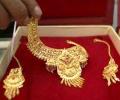
India sharpened measures to curb imports of the yellow metal by hiking the import duty and restricting consignment imports, after shipments jumped to more than 300 tonnes in April and May.

The heightened global uncertainty due to the US "reciprocal tariffs" on India may cause near-term corrections and market turbulence, but the long-term outlook remains constructive, market experts said on Thursday. The US has announced 27 per cent reciprocal tariffs on India, citing high import duties imposed by New Delhi on American goods.

Exporters on Thursday sought a fund of Rs 750 crore for three years to tap USD 25 billion export potential in the US, aiming to seize potential opportunities that may arise as the US President-elect, Donald Trump, has threatened to impose high tariffs on Chinese goods. In its pre-Budget meeting with the finance ministry, Federation of Indian Export Organisations (FIEO) President Ashwani Kumar has also demanded extension of the five per cent Interest Equalisation Scheme (IES).

Sales of gold coins and bars should be curbed after reaching around 300 tonnes

The Bureau of Indian Standards, the apex body involved in developing technical standards and product certification, had introduced a gold hallmarking scheme in 2000 on a voluntary basis. The federation is protesting against the licensing procedure in the proposed Hallmarking Act and the infrastructure for the practical implementation of the act is inadequate.

Over 300 associations, that consists of over 3 lakh manufacturers, retailers, wholesalers and artisans among others, are participating the nationwide stir.

India's exports entered negative territory after a gap of about two years, declining sharply by 16.65 per cent to $29.78 billion in October, mainly due to global demand slowdown, even as trade deficit widened to $26.91 billion, according to data released by the commerce ministry on Tuesday. Key export sectors, including gems and jewellery, engineering, petroleum products, ready-made garments of all textiles, chemicals, pharma, marine products, and leather, recorded negative growth during October. Imports during the month under review rose by about 6 per cent to $56.69 billion on account of increase in the inbound shipments of crude oil and certain raw materials such as cotton, fertiliser and machinery.
The country's exports rose by 23.69 per cent to $34.06 billion in January on healthy performance by engineering, petroleum and gems and jewellery segments even as trade deficit widened to $17.94 billion during the month, according to provisional data of the commerce ministry. Imports in January grew by 23.74 per cent to $52.01 billion, the data, released on Tuesday, showed. Trade deficit widened to $17.94 billion during the month as against $14.49 billion in the same month last year.

India celebrated Dhanteras, the biggest gold buying festival, followed by Diwali, when scarcity of the yellow metal and high prices pushed consumers to buy silver and diamond jewellery.

India's merchandise exports dipped by about one per cent to $38.01 billion in December 2024 against $38.39 billion a year ago, according to government data released on Wednesday. Imports increased by 4.8 per cent to $59.95 billion in December 2024 compared to $57.15 billion in the year-ago month.

India has imposed several restrictions on imports of gold, the biggest non-essential import item, to curb a record trade deficit.
India's exports rose by 2.14 per cent to $36.27 billion in July while the trade deficit almost tripled to $30 billion during the month due to over 70 per cent rise in crude oil imports, according to official data released on Friday. Imports shot up by 43.61 per cent to $66.27 billion in the month compared to July 2021, the data showed. The trade deficit was $10.63 billion in July 2021.

The panel will look into issues related to compliance procedure.
Most of the jewellers who had reopened their showrooms in confusion on Monday, kept shutters down today at Mumbai's Zaveri Bazar and several other places, demanding rollback of the proposal.

The government has asked jewellers to provide information on purchases of gold bars or jewellery worth more than Rs 500,000 by the end of this month, a move seen keeping a check on big transactions amid rising smuggling.

Spot gold fell as far as $1,142.10 an ounce on Thursday, its lowest since November 2014.
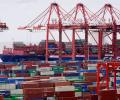
The country's exports surged 49.85 per cent to $35.43 billion in July on account of healthy growth in petroleum, engineering, and gems and jewellery segments, even as the trade deficit widened to $10.97 billion during the month, official data showed on Friday. Imports during the month also rose by about 63 per cent to $46.40 billion, as per the data released by the commerce ministry.

Precious ornaments are estimated to become 3% costlier under GST

Jewellers sold huge quantities of precious ornaments at a premium of up to 50%.
India's exports recorded a flat growth of 0.59 per cent to $31.99 billion in November, even as trade deficit widened to $23.89 billion during the month, according to the data released by the government on Thursday. Exports stood at $31.8 billion in November last year. Imports rose by 5.37 per cent to $55.88 billion in November as compared to $53.03 billion in the corresponding month a year ago, the data showed. During April-November 2022, exports rose by 11 per cent to $295.26 billion as against $265.77 billion in the same month last year.

The interim free trade agreement between India and Australia will come into force on Thursday, providing duty-free access to thousands of domestic goods such as textiles, and leather in the Australian market. The agreement will help almost double the bilateral commerce to $45-50 billion in around five years, according to exporters and industry players. The Economic Cooperation and Trade Agreement (ECTA), which was signed on April 2, would provide duty-free access to Indian exporters of over 6,000 broad sectors, including textiles, leather, furniture, jewellery and machinery in the Australian market.

The government on Tuesday announced setting up of hubs to promote exports through e-commerce medium in public-private-partnership (PPP) mode and initially 10-15 hubs will be established. Finance Minister Nirmala Sitharaman said that these hubs, under a seamless regulatory and logistic framework, will facilitate trade and export-related services under one roof. "To enable MSMEs (micro, small and medium enterprises) and traditional artisans to sell their products in international markets, e-commerce export hubs will be set up in PPP mode," she said.

The new Companies Act that came in to force qualified the money mobilised by jewellery companies as deposits and as a result they had to discontinue such schemes.

Govt has so far refused to bring down the import duty to 2% from the current 10%.
India's exports in January rose 25.28 per cent to $34.50 billion on account of healthy performance by mainly engineering, petroleum and gems and jewellery sectors, even as trade deficit widened to 17.43 billion, according to data released by the commerce ministry on Tuesday. Imports grew by 23.54 per cent to $51.93 billion during the month under review. Trade deficit, difference between imports and exports, stood at $14.50 bn in January 2021.

The scheme is yet to take off.

The best way to curb gold demand is by reducing black money in circulation.

Dealers are selling gold at a discount of Rs 175 for 10 gm.

The 80:20 rule mandates importers to channel at least 20% of the import quantity for jewellery exports.
They would intensify the protest if their concerns are not addressed in the Budget.

India's exports jumped 45.76 per cent to $33.28 billion in August on account of healthy growth in segments like engineering, petroleum products, gems and jewellery and chemicals, even as the trade deficit widened to a four-month high of $13.81 billion.
